Umar Nawaz: Pakistan's Teen Hero Ends 74-Year Trophy Wait

Umar Nawaz: The Teenage Striker Who Ended Pakistan's 74-Year Wait for a Football Trophy
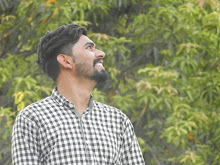
There are football stories, and then there are stories like Umar Nawaz's. This is not just a tale of goals and trophies. It's a story of tragedy turned into purpose, of a family torn apart by violence, and of a teenager who found healing on a football pitch thousands of miles from home.
At just 18 years old, Umar Nawaz has already done what no Pakistani footballer has managed in 74 years — helped bring home an international trophy. But to understand why this story matters so much, you have to go back to where it all began: Peshawar, 2014.

From Tragedy to Triumph: Umar Nawaz's Early Life
Umar Nawaz was born on 28 September 2007 in Peshawar, Pakistan. He was only seven years old when the Army Public School massacre shook the entire nation on 16 December 2014. Umar wasn't at the school that day, but the tragedy hit his family directly. His older brother Haris was among those killed, while his other brother, Ahmad, was shot in the arm and needed emergency surgery.
In the aftermath, the family made the difficult decision to relocate to the United Kingdom so Ahmad could receive proper medical treatment. What started as a necessity soon became permanent, as the family felt Pakistan was no longer a safe place to return to.
For a young boy who had just lost his brother, adjusting to a new country was not easy. Umar has spoken about feeling traumatized in those early days in Birmingham, constantly worried something similar might happen again. But slowly, the UK began to feel like home. He picked up English within months and started spending his afternoons at the local park, teaching himself basic football skills with a set of cones.
That small, ordinary decision — a kid messing around with a ball after school — ended up changing the course of his life. Looking back, it's remarkable how something so casual, a way to simply pass the time in a new and unfamiliar country, would eventually turn into a career that carries the hopes of an entire nation's football fanbase.
Discovering Football in England
Football wasn't something Umar grew up with in Peshawar. He has admitted that he barely remembers his childhood there, aside from playing cricket with his brothers. It was in England that the sport truly found him.
His raw talent didn't go unnoticed for long. A teammate's father, who happened to coach at Bournville Academy, spotted his potential and brought him in. Umar spent close to six years there, sharpening his game year after year, growing not just as a footballer but physically as well — eventually developing into a towering 6ft 3in striker with the kind of frame that immediately draws comparisons to some of the modern game's most dominant forwards.
That development opened doors. He earned trials with several clubs, eventually choosing Coventry City first. But it was during a match for Coventry that scouts from Wolverhampton Wanderers took notice and offered him a contract. From there, his youth career progressed further when he joined Wrexham's academy setup in July 2024, a club that had itself become a global talking point in football circles around that time.
Despite the promising academy journey, Umar left Wrexham in May 2026 without having made a single senior team appearance for the club — a reminder that even for rising talents, the path to first-team football is rarely simple. Academy football is often filled with players who show flashes of brilliance but need patience, the right opportunity, and sometimes a change of environment to truly break through. For Umar, that breakthrough moment would not come at club level — it would come while wearing the green shirt of Pakistan.
The Call That Changed Everything
While his club career was still developing, a much bigger opportunity arrived — a call-up to represent Pakistan. For Umar, there was no hesitation.
He has described the moment as one of the proudest of his life, calling it an honor to be chosen out of millions to represent his home country. His international journey officially began in November 2025, when he made his debut for Pakistan against Syria, coming on as a substitute in a heavy 0–5 defeat.
It would have been easy for a young player to be discouraged after such a rough start on the international stage. Instead, Umar treated it as a learning experience, a chance to understand the gap between youth-level football in England and senior international competition, and a motivation to work even harder in training.
Returning to Pakistan for that debut wasn't easy emotionally. It was, after all, the same country where he lost his brother. But Umar chose to see it differently — as a moment to make his family proud and to honor the memory of the brother he lost. In many ways, every appearance for Pakistan since then has carried that same emotional weight, turning ordinary matches into deeply personal milestones.
The Diamond Jubilee Tournament: A Historic Run

Fast forward to June 2026, and Umar Nawaz found himself part of one of the most memorable chapters in Pakistani football history — the Diamond Jubilee International Football Tournament held in the Maldives.
Pakistan's campaign didn't start well. A goalless draw against Bangladesh left the dressing room quiet and deflated. The team knew they had created chances but lacked the composure to finish them off. For a young squad still finding its identity under a new coaching setup, that kind of start could easily have spiralled into frustration and doubt.
Everything changed in the very next match against the Maldives. Given his opportunity, Umar made an instant impact, capitalizing on a goalkeeping error to score his first international goal. Pakistan won that match comfortably, snapping a winless streak that had stretched for well over two and a half years. For a squad that had gone so long without tasting victory, that single goal did more than put Pakistan ahead on the scoreboard — it lifted an entire mood, both inside the dressing room and among supporters following from back home.
Then came the game against Afghanistan in the group stage — and arguably the moment of the tournament. A quick, flowing move down the line ended with Umar sprinting into space and finishing clinically. Pakistan won 2–0 and marched into the final, once again facing Afghanistan.
In the final, Pakistan sealed a 2–0 victory, lifting the trophy and ending a wait that had stretched back 74 years. At just 18, Umar Nawaz was the youngest player in the squad — and one of its standout performers, having scored twice across the tournament. For a nation where football has long lived in the shadow of cricket, a moment like this carried significance far beyond the pitch, offering a glimpse of what the sport could become in Pakistan if given the right investment and attention.
Umar Nawaz Career Statistics at a Glance
Category Details Full Name Umar Nawaz Date of Birth 28 September 2007 Place of Birth Peshawar, Pakistan Height 1.91 m (6 ft 3 in) Position Forward Youth Clubs Bournville Academy, Wolverhampton Wanderers, Wrexham International Team Pakistan International Debut 18 November 2025 vs Syria International Caps 4 International Goals 2 Major Honour 2026 Diamond Jubilee International Football Tournament — Champion
| Category | Details |
|---|---|
| Full Name | Umar Nawaz |
| Date of Birth | 28 September 2007 |
| Place of Birth | Peshawar, Pakistan |
| Height | 1.91 m (6 ft 3 in) |
| Position | Forward |
| Youth Clubs | Bournville Academy, Wolverhampton Wanderers, Wrexham |
| International Team | Pakistan |
| International Debut | 18 November 2025 vs Syria |
| International Caps | 4 |
| International Goals | 2 |
| Major Honour | 2026 Diamond Jubilee International Football Tournament — Champion |
International Goals Record
No. Date Opponent Result Competition 1 4 June 2026 Maldives 3–0 win Diamond Jubilee Tournament 2 7 June 2026 Afghanistan 2–0 win Diamond Jubilee Tournament
| No. | Date | Opponent | Result | Competition |
|---|---|---|---|---|
| 1 | 4 June 2026 | Maldives | 3–0 win | Diamond Jubilee Tournament |
| 2 | 7 June 2026 | Afghanistan | 2–0 win | Diamond Jubilee Tournament |
A Team Built Like a Family
Beyond the goals and statistics, Umar has often spoken about the bond within the Pakistan squad. Despite playing alongside several experienced diaspora players for the first time, he quickly felt embraced as part of a tight-knit unit. According to him, that closeness wasn't built purely through training sessions, but through simple things — shared meals, downtime together, and constant conversation off the pitch.
This sense of unity is often underestimated in football, but it plays a huge role in how teams perform under pressure. A squad that trusts and understands one another off the pitch tends to communicate more instinctively during matches, and that chemistry was visible throughout Pakistan's tournament run — from the calm build-up play to the way players celebrated each other's goals as if they were their own.
He credits much of the squad's discipline and calm temperament under pressure to head coach Nolberto Solano, a former Premier League player with Newcastle United. Even after a disappointing opening draw against Bangladesh, Solano reportedly kept his composure, choosing constructive feedback over frustration — an approach the players deeply respected.
Having a coach with genuine top-flight playing experience matters, especially for a young and developing squad. Solano's approach of encouraging extra practice, staying patient during setbacks, and building a calm environment appears to have played a direct role in turning a group of talented individuals into a cohesive, trophy-winning unit.
Football as Healing
Perhaps the most powerful part of Umar's story isn't about medals or match reports at all. It's about how football became a coping mechanism after unimaginable loss. He has spoken about using the sport to escape painful memories, saying that playing helped keep his mind healthy during a difficult period of his life.
This connection between sport and mental wellbeing is something many athletes across the world can relate to, but it carries an added layer of significance in Umar's case. For a child who lost a sibling to an act of terrorism, football wasn't simply a hobby or a potential career path — it became a form of quiet therapy, a space where grief could be processed through movement, focus, and eventually, joy.
His surviving brother, Ahmad, has also played a major role in his motivation. Ahmad went on to become president of Oxford University's Union — a personal triumph that Umar says continues to inspire him to keep pushing forward in his own career. Faith has played its part too, with Umar often speaking about staying spiritually grounded regardless of how a match unfolds, treating both good and difficult performances as moments to remain thankful.
Looking Ahead: Dreams of a World Cup
Umar's ambitions don't stop at a regional trophy. Watching nations like Iraq and Jordan compete on football's biggest stage has fueled his belief that Pakistan can eventually qualify for a World Cup. He has been vocal about what the country needs to get there — more competitive fixtures, a proper domestic league to develop homegrown talent, and continued integration of diaspora players who bring valuable international experience.
This is a conversation that extends well beyond one player. Pakistan football has historically struggled with limited infrastructure, inconsistent scheduling, and a lack of professional league structure compared to the country's cricket-obsessed sporting culture. Umar's success, and the success of players like him, could act as a catalyst for change — proof that investment in youth development and diaspora scouting can produce real, tangible results on the international stage.
He often draws inspiration from strikers like Erling Haaland and Hugo Ekitike, citing similarities in build, playing style, and positioning. It's no surprise that some have already started calling him the "Pakistani Haaland" — a nickname he seems determined to live up to. Whether or not he ever reaches that level of global stardom, the comparison itself speaks to the kind of physical presence and goal-scoring instinct he's building his game around.
Why Umar Nawaz's Story Resonates Beyond Football
What makes this story stand out isn't just the football itself — it's the layers behind it. A family shattered by tragedy. A forced relocation to a new country. A child processing grief through a sport he'd never even played before. And, more than a decade later, a young man standing on a podium in the Maldives, holding a trophy that ended a 74-year wait for his homeland.
It's the kind of narrative that transcends sport, touching on themes of resilience, identity, and what it means to represent a country you were forced to leave as a child. For young Pakistani footballers watching from home or from the diaspora, Umar's journey offers proof that talent, discipline, and opportunity can combine to create something meaningful — even after starting from the most difficult of circumstances.
Frequently Asked Questions About Umar Nawaz
Who is Umar Nawaz?
Umar Nawaz is a Pakistani professional footballer born on 28 September 2007 in Peshawar. He plays as a forward and has represented the Pakistan national football team since 2025.
Which clubs has Umar Nawaz played for?
Umar came through Bournville Academy before joining Wolverhampton Wanderers, and later moved to Wrexham's academy setup in 2024. He left Wrexham in 2026 without a senior appearance.
How many goals has Umar Nawaz scored for Pakistan?
As of his last recorded appearances, Umar has scored 2 goals in 4 international caps for Pakistan, both coming during the 2026 Diamond Jubilee International Football Tournament.
Why is Umar Nawaz called the "Pakistani Haaland"?
The nickname comes from the similarities fans and pundits have drawn between Umar's tall, powerful build and playing style and that of Manchester City striker Erling Haaland, who Umar has named as one of his biggest football inspirations.
What happened to Umar Nawaz's family in 2014?
Umar's brother Haris was killed and his other brother Ahmad was injured during the 2014 Army Public School attack in Peshawar. The family relocated to the United Kingdom shortly afterward.
Final Thoughts
Umar Nawaz's journey — from a grieving seven-year-old in Peshawar to a national hero lifting a trophy for Pakistan at 18 — is a reminder of how sport can carry meaning far beyond the scoreline. His story blends personal resilience with national pride, and if his current trajectory continues, this may only be the beginning of a much bigger chapter for both Umar and Pakistani football.
As he put it himself: good things are coming for Pakistan football, and this young striker intends to be at the heart of it.




Comments
Post a Comment